
Japan Finalizes October Residency Fee Hike for Foreign Nationals, Amounts Unchanged After Public Comment

Based on reporting by Mainichi Shimbun, August 25, 2026

Japan's government has formally approved a steep increase in the fees foreign residents pay for immigration procedures, moving ahead with the plan largely as originally proposed despite public pushback during the comment period.
On August 25, the Cabinet approved a revision to the government ordinance needed to put the fee hike into effect. During the public comment process, some respondents argued the increase "runs counter to realizing a society where Japanese and foreign residents coexist." The government did not change the size of the increase in response, and the steep hike will go into effect in October as originally planned.
Why the government says it's raising fees
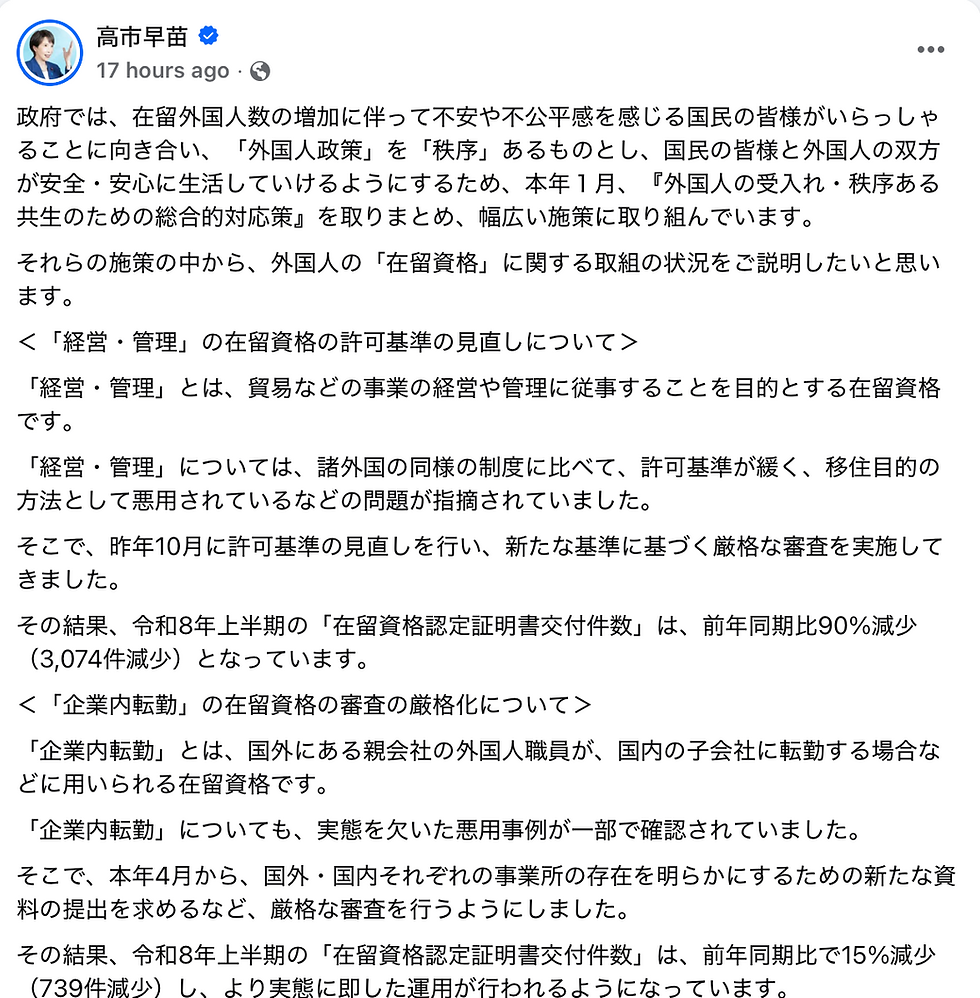
Officials say the additional revenue will fund immigration control operations and Japanese-language learning programs for foreign residents. Speaking at a post-Cabinet press conference, Justice Minister Hiroshi Hiraguchi said the fee increase "is meant to carry out measures toward an orderly society in which Japanese and foreign residents coexist," calling it "significant."
What's actually changing
The revised Immigration Control and Refugee Recognition Act passed in May, and in July the Immigration Services Agency published draft figures for the new fee schedule. Currently, changing one's status of residence or renewing a period of stay costs a flat 6,000 yen at the counter, regardless of how long the extension is for. Under the new system, the fee will scale with the length of stay being granted:
Renewal/extension of 3 months or less: 10,000 yen
Renewal/extension of 1 year: 33,000 yen
Renewal/extension of 5 years or more: 75,000 yen
(Other durations in between will be charged at intermediate rates.)
Permanent residency applications will see an even steeper jump — from the current 10,000 yen to 200,000 yen, a twentyfold increase.
A narrow discount, and who's left out of it
Given how large the increases are, the Immigration Services Agency also released draft guidelines in July defining who qualifies for a reduced fee. To qualify, an applicant must meet both of the following conditions:
Their standard of living is at or below that of a "person requiring protection" under Japan's Public Assistance Act, and
There are humanitarian grounds warranting consideration.
Critics have pointed out that these criteria are narrow enough to exclude roughly 90% of refugee status applicants from any fee reduction — and that detail, too, was left unchanged in the final version.
One new addition: relief for single parents raising Japanese children
The government did make one concession. During the public comment period, respondents noted that foreign residents raising children alone tend to be in a financially precarious position. In response, the Immigration Services Agency added a new category to the reduced-fee eligibility list: financially struggling foreign residents who are the sole caregiver for a child who is a Japanese national or a special permanent resident, and who are changing their status of residence to "Designated Activities" (特定活動).
Beyond that carve-out, however, the fee schedule and reduction criteria head into October largely unchanged from the government's original July proposal.
Comments