
Japan's Business Manager Visa: What the 2025 Rule Changes Actually Mean for You

Last updated: June 26, 2026 — This page has been revised to reflect the latest official Q&A, including reordered topics and updated answers.

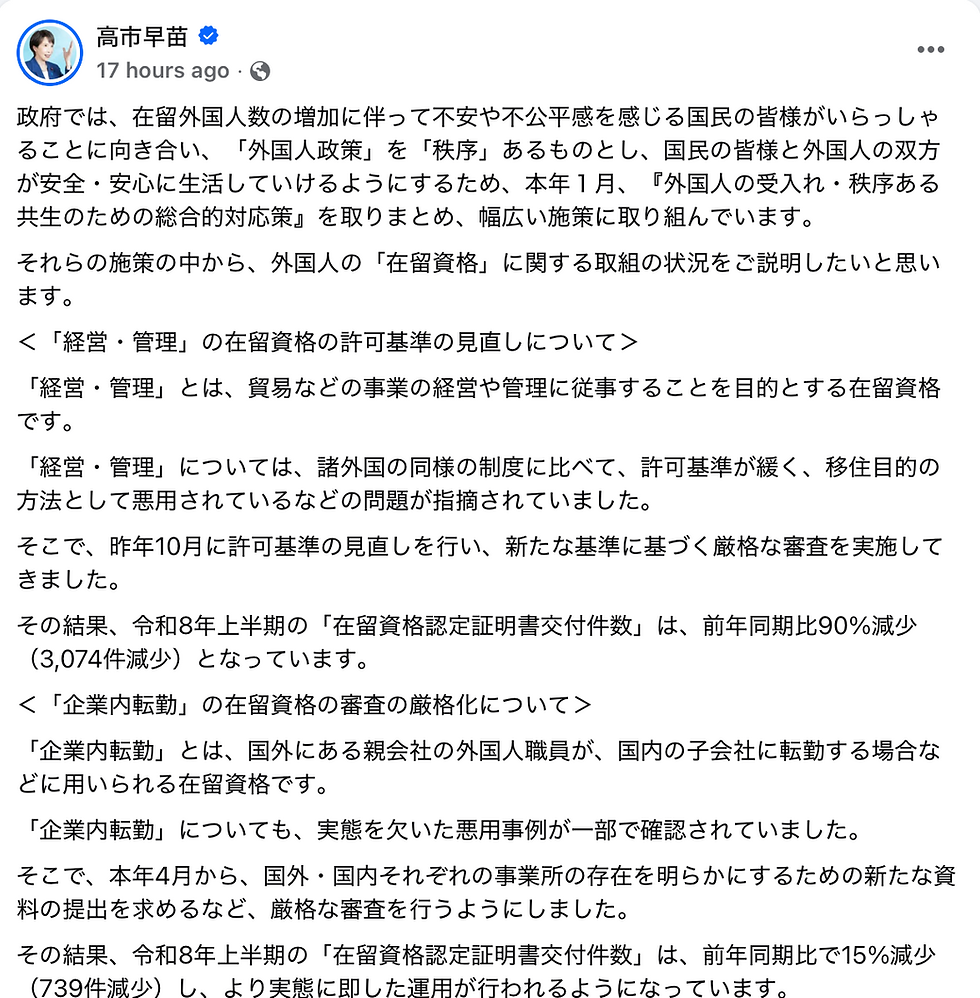
If you hold — or are planning to apply for — Japan's Business Manager visa (経営・管理), you may have seen alarming headlines claiming you need ¥30 million to stay in Japan or that renewals will be denied unless you hit a specific capital threshold. We want to set the record straight with clear, accurate information straight from Japan's immigration authorities.
Background: What Changed?
Japan revised the Landing Criteria Ordinance (上陸基準省令) for the Business Manager visa. The revision introduces updated financial requirements tied to the concept of "total assets devoted to the business" — ¥30 million is the figure that has caused the most confusion.
The good news: the rules are more nuanced than the rumors suggest.
Q&A: The Most Common Questions Answered
Q1: I already hold a Business Manager visa. Will I be denied renewal if I don't meet the new standards right away?
No. There is a 3-year grace period from the date the revision took effect. Until October 16, 2028, failing to meet the new criteria alone will not be grounds for a renewal denial. You have time to prepare.
Q2: If my finances and tax payments are in order, can I still be denied a renewal?
Yes — for other reasons. Renewal reviews look beyond financials. Immigration will also check whether you are complying with:
Labor laws (Labor Standards Act, Minimum Wage Act, etc.)
Social insurance, employment insurance, and workers' compensation enrollment and payment
Required business licenses and permits
Problems in any of these areas will count against you, even if your books are clean. Make sure all legal obligations as an employer are met.
Q3: I heard that if I can't raise ¥30 million within 3 years of the revision, I'll have to leave Japan. Is that true?
No — this is a misconception.
Even after the 3-year grace period ends (after October 16, 2028), falling short of the ¥30 million threshold will not automatically result in denial. Immigration authorities will look at the full picture:
Is your business performing well?
Are you properly paying corporate taxes and other obligations?
Is there a realistic prospect of meeting the standard by your next renewal?
All of these factors are weighed together. A shortfall in capital alone is not automatic grounds for denial.
Q4: I'm a sole proprietor, not a corporation. Do I also need ¥30 million in capital?
No. The ¥30 million figure refers to different things depending on your business structure:
Business Type | What "¥30 million" Refers To |
Corporation | Registered capital (資本金) |
Sole proprietor | Total assets invested in the business — including office costs, one year of employee salaries, equipment, and other operational expenses |
If you run your business as an individual (個人事業主), you are not required to register ¥30 million in capital. Instead, the calculation covers what you have actually invested to operate the business.
Key Takeaways
The ¥30 million requirement is not a blanket rule that immediately applies to everyone.
Existing visa holders have until October 16, 2028 before new standards are formally applied to renewals.
Even after that date, context matters — good business performance and tax compliance will be weighed alongside financial thresholds.
Sole proprietors are assessed differently from corporations; you do not need to register ¥30 million in capital.
Compliance with labor and insurance laws is increasingly important in renewal decisions.
What Should You Do Now?
Review your labor law compliance — are all employees enrolled in social and employment insurance?
Stay current on taxes — corporate tax, consumption tax, and withholding tax payments should be up to date.
Keep records of your business investment — especially if you are a sole proprietor, document your operational expenses clearly.
Consult us if you have concerns about your specific situation.
Disclaimer: This article is for general informational purposes only and does not constitute legal advice. Immigration rules can change, and individual circumstances vary. Please consult us for guidance specific to your case.
Comments