
Japan to Raise Income Bar for "Highly Skilled Professional" Status as Part of Broader Immigration Tightening


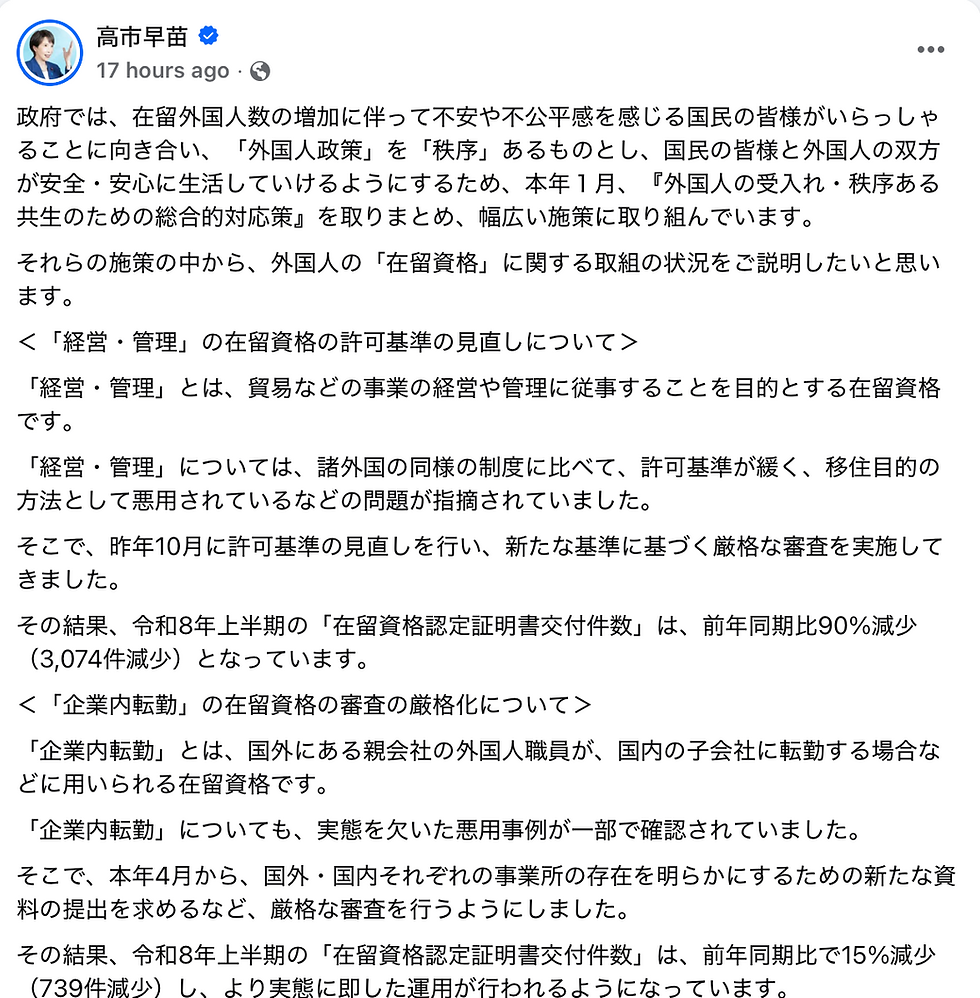
Japan's government is preparing to raise the income threshold used to qualify foreign workers as "highly skilled professionals," a status that comes with faster paths to long-term residence and permanent residency. The move, reported by Nikkei on August 14, 2026, is part of a wider push to tighten the country's immigration rules while still trying to attract top global talent.
What's Changing
The Ministry of Justice is expected to revise the relevant ministerial ordinance sometime during fiscal 2026. The stated goal is to prioritize the quality of highly skilled foreign talent rather than simply the quantity, and to bring the qualifying criteria in line with how much wages and prices have risen since the system was introduced.
At the same time, Japan's Immigration Services Agency is tightening the separate track for permanent residency. Going forward, applicants will generally need to show household income at or above the average for Japanese households in order to qualify. The agency announced on August 4 that it plans to revise its permanent residency guidelines as early as October, and that it will also clarify the "national interest" criteria used to evaluate applicants — effectively making permanent residency harder to obtain.
How the Points System Works
Japan evaluates candidates for highly skilled professional status through a system known as the "Points-Based System for Highly Skilled Foreign Professionals." Points are awarded across a set of "base" categories — academic background, annual income, age, and work history — plus a set of "bonus" categories, such as Japanese-language ability.
Score 70 points or more: the applicant qualifies for "Highly Skilled Professional (i)" status, which grants a five-year period of stay. After maintaining that status for a certain period, holders can move on to "Highly Skilled Professional (ii)."
Score 80 points or more: the path to permanent residency opens up significantly. Normally, applicants need roughly ten years of residence in Japan to be eligible for permanent residency; under this higher score, that requirement can shrink to just one year.
Why the Formula Is Being Rewritten
The points system was launched in 2012, and its scoring formula has never undergone a substantial revision since then — even as wages and the cost of living have climbed considerably. The government now wants the formula to reflect current economic conditions.
One example cited in the report: under today's rules, an applicant aged 29 or younger earning an annual income of ¥4 million currently receives 10 points toward their total. Regulators are now considering raising that income bar and/or reducing how many points such income levels are worth.
The bonus-point categories are also being reviewed. Over the years, more and more bonus items were added at the request of various government ministries, and officials now plan to eliminate categories that are rarely used, with the aim of speeding up the review process overall.
A related pain point: immigration officers have reportedly struggled to consistently evaluate foreign professional qualifications and research achievements submitted by applicants, which slows down processing. Streamlining this evaluation is another target of the reform.
The Bigger Picture
Despite the tightening, the government continues to frame highly skilled foreign professionals as valuable contributors to innovation at Japanese companies and research institutions — a group it says it wants to actively welcome. As of the report, roughly 30,000 people currently hold Highly Skilled Professional (i) status in Japan.
The net effect of these changes is a system that aims to be more selective on income and more efficient on paperwork — welcoming top talent, but asking more of them financially in return for the fast track to long-term residence.
Note: This post summarizes reporting from Nikkei's electronic edition (日本経済新聞電子版), published August 14, 2026. Details of the revised ordinance and guidelines were not yet finalized at the time of that report, so specific thresholds may change before implementation.
Comments